How This Nation Has Hidden What It Did
By Eric Lawrence Frazier, MBA
The first weapon deployed against Black America was not the whip. It was the pen. Before the last Confederate soldier surrendered, before the ink dried on the Thirteenth Amendment, before the first Reconstruction legislature was seated — the project of rewriting what had happened was already underway. The men who lost the war understood something the men who won it did not fully appreciate: that the battle for memory is longer than the battle for territory, and considerably more decisive.
What Parts One through Eight of this series document is what was done. The Middle Passage. The constitutional codification of racial hierarchy. The systematic destruction of Reconstruction. The federal architecture of the racial wealth gap. The War on Drugs has documented racial suppression. The foreign policy calculus has consistently valued some lives over others. The evidence is in the public record. It has always been in the public record.
Part Nine documents what was then done to make sure most people never found it.
The Misrepresentation Industry is not a conspiracy. Conspiracies require coordination, secrecy, and a small group of actors. This is something more durable than a conspiracy. It is an infrastructure — academic, cinematic, journalistic, political, and now governmental — that has operated continuously since 1865, that has employed thousands of credentialed people who believed they were doing legitimate work, and that has succeeded so completely that its central product — the mythology of American benevolence — is still the default assumption of most Americans when they think about their own history.
The infrastructure has a beginning. It has architects. It has named products. And it has a present chapter — the most explicit in its history — being written right now.
The Lost Cause: The Original Rewrite
In 1866, one year after Appomattox, former Confederate general Jubal Early began organizing what would become the Southern Historical Society. His explicit purpose was to establish a historical record of the Civil War that would, as he wrote to fellow Confederate veterans, “secure the truth of Confederate history.” The truth Early had in mind bore no resemblance to the documented truth. It would become the most successful historical fabrication in American history.
The Lost Cause doctrine held that the Confederacy had not fought to preserve slavery but to defend states’ rights and a noble agrarian civilization against Northern aggression. It held that enslaved people had been content, even faithful, participants in a benevolent social order. It held that Reconstruction was a corrupt imposition by Northern radicals and their Black political instruments upon a prostrate South. And it held that the Confederate cause, though defeated on the battlefield, had been morally correct.1
None of this was historically defensible. The Confederate states had published their own declarations of secession, and those declarations named slavery as their cause with a directness that left no interpretive room. Mississippi’s declaration stated it plainly: “Our position is thoroughly identified with the institution of slavery — the greatest material interest of the world.” South Carolina’s declaration named the threat to slavery fourteen times. These were not documents that required interpretation. They required suppression.
The suppression was systematic. In 1919, the United Daughters of the Confederacy published a guide for school textbooks that instructed publishers and school districts to reject any textbook that “glorified Abraham Lincoln,” “vilified Jefferson Davis,” or “stated that the war was fought to perpetuate slavery.” The guide was distributed to school boards across the South. Compliant textbooks were adopted. Noncompliant textbooks were removed. Generations of American schoolchildren — not only in the South — were educated in the Lost Cause version of events.2
Former Confederate general Edward Pollard, who coined the phrase “the Lost Cause” in his 1866 book of the same title, was explicit about the strategy. What the South had lost on the battlefield, he wrote, it could still win “in a war of ideas.” That war was prosecuted through monuments, textbooks, memorial associations, and the political rehabilitation of men who had committed treason. By 1920, there were Confederate monuments in front of courthouses across the South — not memorials to the dead, but political statements about who held power and what history meant.3
The Lost Cause was not folk mythology. It was an organized, funded, institutionally supported rewriting of the historical record by people who understood exactly what they were doing. It was the first chapter of the Misrepresentation Industry. Every chapter that followed used the same template.
The Academic Machinery: The Dunning School
Lost Cause mythology required academic legitimacy to survive. It found it at Columbia University.
William Archibald Dunning was a professor of history and political philosophy at Columbia from 1886 until his death in 1922. His scholarship on Reconstruction — particularly his 1907 book Reconstruction, Political and Economic — became the dominant academic framework for understanding that period for the first half of the twentieth century. The Dunning School, as his approach came to be known, treated Reconstruction as a catastrophe imposed on the South by corrupt Republican politicians and unqualified Black officeholders who were incapable of self-governance. It treated the violent overthrow of Reconstruction governments as a legitimate act of self-defense by white Southerners reclaiming their civilization.4
Dunning’s students spread his framework across American universities. Walter Lynwood Fleming at Vanderbilt. J.G. de Roulhac Hamilton at North Carolina. William Garrott Brown at a succession of institutions. Each produced scholarship that built on the Dunning framework, extended it into new states and new periods, and gave it the apparatus of legitimate historical inquiry — footnotes, archives, university press imprints. By 1915, the year D.W. Griffith released The Birth of a Nation, the Dunning School’s version of Reconstruction was the version taught at American universities.
The consequences were not abstract. The historical framework that depicted Black political participation as inherently corrupt and incompetent provided the intellectual justification for the disenfranchisement laws, the poll taxes, the literacy tests, and the systematic removal of Black Americans from political life that occurred between 1877 and 1965. If Black governance was documented failure — and the Dunning School documented it as such — then exclusion from governance was not injustice. It was management.
The Dunning School was not discredited by new evidence. The evidence against it was always available. W.E.B. Du Bois published Black Reconstruction in America in 1935 — a meticulously documented counter-history that demolished the Dunning framework on evidentiary grounds. Du Bois showed that Black Reconstruction governments had built public school systems, reformed tax codes, and produced legislative records that compared favorably to the governments that replaced them. The book was largely ignored by the academic establishment for two decades. Du Bois was not employed at a major white university. Dunning had been.5
The Dunning School’s grip on American historical education did not break until the civil rights movement made its assumptions politically untenable in the 1960s. Three generations of American students had been educated in its framework before that break. The mythology it produced did not disappear when the scholarship was discredited. It had already been embedded in textbooks, films, popular culture, and the political assumptions of people who had never read Dunning but had absorbed his conclusions.
The Media Architecture: Manufacturing Black Pathology
On March 3, 1915, Woodrow Wilson screened a film in the White House. He was the first president to screen a film there. He reportedly said afterward that it was “like writing history with lightning.” The film was The Birth of a Nation. Wilson was a trained historian. He knew what he was watching.
D.W. Griffith’s film was based on Thomas Dixon’s novel The Clansman and depicted Black men during Reconstruction as savage, sexually predatory, and politically corrupt. It depicted the Ku Klux Klan as heroic defenders of white civilization. It was the highest-grossing film in American history at the time of its release. It sparked a national revival of the Klan that brought its membership to an estimated four million by the 1920s. It was used as a recruiting tool by the Klan for decades afterward.6
The Birth of a Nation established a template for the media architecture that followed: Black men as threat, Black communities as pathological, Black political power as corruption. The template did not require conscious coordination to propagate. It was profitable. Profitable images repeat. The specific images changed across the decades — from the Reconstruction predator to the 1970s blaxploitation criminal to the 1980s crack dealer to the superpredator of the 1990s — but the underlying structure remained constant: Black people as the source of social disorder requiring management.
The welfare queen entered American political vocabulary in 1976 when Ronald Reagan, campaigning for the Republican presidential nomination, began describing a woman in Chicago who had “eighty names, thirty addresses, twelve Social Security cards” and collected vast sums in fraudulent benefits. The story was an amalgam — loosely based on a real fraud case involving a woman named Linda Taylor whose actual crimes were far more complex than Reagan’s rendering — stripped of context, racialized through implication, and repeated until it became the defining image of welfare policy for a generation.7
The welfare queen was not a journalistic product. It was a political one. But journalism amplified it, repeated it, and declined to correct it with the same energy that had propagated it. The image served a function: it provided a human face for the argument that social spending was being extracted by undeserving Black recipients from hardworking white taxpayers. The argument required the image. The image required the media. The media provided both.
The pattern extended to crime coverage. Study after study from the 1990s through the 2010s documented that television news coverage overrepresented Black suspects relative to their actual proportion of arrests, and underrepresented white suspects. The audience watching that coverage formed impressions of who committed crime that were shaped not by the crime statistics but by the editorial choices of news directors who were, in most cases, making those choices without conscious racial intent. The infrastructure does not require malice. It requires repetition.8
The Welfare Mythology and the Black Family
In 1965, Assistant Secretary of Labor Daniel Patrick Moynihan published a report titled The Negro Family: The Case for National Action. The report identified rising rates of single-parent households in Black communities and argued that this “tangle of pathology” was producing a self-sustaining cycle of poverty. The Moynihan Report, as it came to be known, was intended as an argument for federal intervention. It became something else entirely.9
The report’s framework — that the structure of the Black family was the primary cause of Black poverty — was extracted from its policy context and used to argue the opposite of what Moynihan intended. If Black poverty was caused by Black family dysfunction, then the solution was not federal investment but behavioral correction. The structural causes Moynihan had documented — unemployment, discrimination, the legacies of slavery — were displaced by the symptom he had identified. The diagnosis became the verdict.
What the data showed, and what the mythology obscured, was causation. The dissolution of two-parent Black households did not precede the economic devastation of Black communities. It followed it. In 1950, when legal segregation was fully enforced and Black Americans were systematically excluded from the GI Bill, federal housing programs, and union labor markets, the Black two-parent household rate was higher than it is today. The family structure that the mythology blamed for poverty was more intact under the conditions the mythology ignored.
The 1996 welfare reform legislation — the Personal Responsibility and Work Opportunity Reconciliation Act, signed by President Clinton — was built on the Moynihan framework as it had been distorted. It converted the federal welfare guarantee into a block grant program with time limits and work requirements. The legislation was framed as restoring personal responsibility. The data on what drove welfare dependency — job loss, wage stagnation, the systematic exclusion of Black workers from labor markets — was not the frame. The welfare queen was the frame.10
The mythology has outlasted the data that refutes it. Studies consistently show that the majority of welfare recipients are white, that the duration of welfare use is shorter than public perception suggests, and that the primary driver of long-term dependency is structural unemployment — not personal failure. These findings are published in peer-reviewed journals. They do not circulate with the velocity of a presidential anecdote about a woman in Chicago with eighty names.
The First Black President Construction
The Misrepresentation Industry evolved. Its earlier products — the Lost Cause, the Dunning School, Birth of a Nation, the welfare queen — manufactured Black pathology. They argued that Black people were the source of social disorder and therefore required management. The industry’s most sophisticated modern product works differently. It does not manufacture Black pathology. It manufactures Black satisfaction.
The election of Barack Obama in 2008 was a genuine historical event. It is not diminished by analysis. What surrounded it, however — the narrative construction that accompanied it and followed from it — became one of the industry’s most effective instruments.
The post-racial narrative emerged immediately. The argument, advanced across media platforms, political commentary, and eventually legal scholarship, was that the election of a Black president demonstrated that America had transcended its racial history. The Supreme Court cited this argument in Shelby County v. Holder in 2013, when it struck down the preclearance provisions of the Voting Rights Act. Chief Justice John Roberts, writing for the majority, pointed to “dramatic changes” in racial progress as justification for removing federal oversight of states with documented histories of voter suppression. Within hours of the decision, several states began implementing voter restriction laws that the preclearance provisions had previously blocked.11
The post-racial narrative did not require Obama’s participation to function. It was applied to him, around him, and through him by a media and political infrastructure that needed the argument more than it needed the evidence. The evidence — the racial wealth gap, the incarceration rates, the documented disparities in health outcomes, housing, education, and employment — did not change during the Obama years. In some measures it widened. The narrative of transcendence required that this data be interpreted as residual, as legacy, as the last remnants of a racism that the election had fundamentally addressed.
The construction also operated in a second direction. The political management of Black identity during the Obama years required that Black political demands be subordinated to the imperatives of coalition maintenance. When Black activists pressed for specific policy responses to police violence, housing discrimination, or the continuing racial wealth gap, they were counseled — by allies as much as opponents — to be patient, to trust the process, to understand that the perfect could not be the enemy of the good. The first Black president became, in this way, an instrument for the deferral of Black political demands rather than their fulfillment.
This is the industry’s most sophisticated operation because it is not experienced as suppression. It is experienced as representation. The image of power substitutes for its exercise. The symbol displaces the substance. And the people who point to the gap between the two are accused of ingratitude.
The Current Erasure Campaign
Every previous chapter of the Misrepresentation Industry operated through the production of false content: false history, false images, false data, false narratives of transcendence. The current chapter operates differently. It operates through deletion.
On January 20, 2025, the same day the DEI executive orders were signed, federal agencies began removing content from government websites. The names of Harriet Tubman, the Tuskegee Airmen, and the Navajo Code Talkers were among the thousands of references to non-white historical figures deleted from federal digital infrastructure in the first weeks of the administration. The military flagged images on its own websites for removal — primarily content about war heroes who were Americans of color. The Internal Revenue Service deleted every mention of the words “diversity,” “equity,” and “inclusion” from its procedural handbook, including from passages about taxes and finance where the words carried no ideological content whatsoever.12
On March 27, 2025, Executive Order 14253 — “Restoring Truth and Sanity to American History” — directed the Smithsonian Institution and the Secretary of the Interior to identify and remove “improper ideology” from all federally funded spaces of public history. The order specifically targeted the National Museum of African American History and Culture, calling it “oppressive” and characterizing its content as “divisive race-centered ideology.” The museum’s director, Kevin Young, resigned. Vice President JD Vance was empowered to review all Smithsonian programs and remove content deemed inconsistent with administration policy.13
The order also directed the Interior Secretary — whose department oversees the National Park Service — to review all historical exhibits at sites across the country. The administration reviewed nearly two hundred exhibits at parks including Independence National Historical Park in Philadelphia, where an exhibit documenting the nine people enslaved by George Washington at the site of his Philadelphia residence was removed. The city of Philadelphia sued the federal government over the removal. Citizens posted handmade signs at the site to replace what had been taken.14
The New York Times identified nearly two hundred words that the administration had flagged to limit or avoid on government websites and in official materials. The list included “women,” “Tribal,” “disability,” “race and ethnicity,” and broad categories of language that made it impossible to document the history of minority communities without violating the directive. You cannot tell the story of the Navajo Code Talkers if you cannot write the word “Tribal.” You cannot document the Tuskegee syphilis study if you cannot write “race and ethnicity.” The deletion of language is the deletion of the people whose existence that language describes.15
The Confederate general Albert Pike, whose statue had been torn down during the 2020 protests following the murder of George Floyd, was renovated and reinstalled by the National Park Service in October 2025. Martin Luther King Jr. Day and Juneteenth were removed from the list of free admission days at national parks. Flag Day — which is also the president’s birthday — was added. The 1619 Project was removed from consideration for federal gift shop distribution. The demolition of Black Lives Matter Plaza in Washington was ordered and completed.16
Each of these actions, taken individually, can be argued about. Taken together, they constitute a policy. The policy is legible. It is the same policy that the United Daughters of the Confederacy pursued in 1919 when they told school boards which textbooks to reject. It is the same policy that the Dunning School pursued when it produced scholarship that made Black governance look like failure. It is the same policy that every previous chapter of the industry pursued: control the record, control the memory, control what the next generation believes about what happened.
The difference is the instrument. Previous chapters used production — creating false content to displace true content. This chapter uses deletion — removing true content so that nothing displaces it. A blank space is harder to argue with than a lie. A lie can be refuted. A blank space just looks like there was nothing there.
The Resistance: The Record That Would Not Die
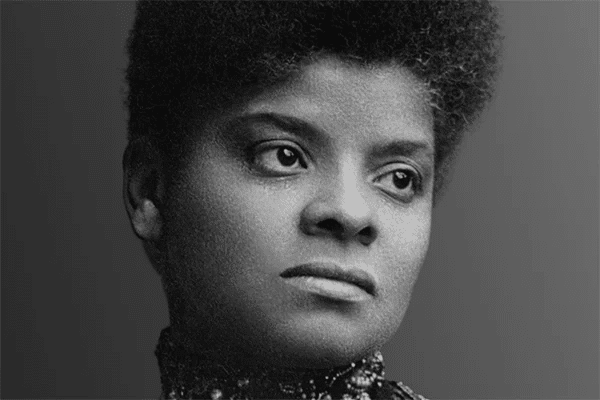
Every chapter of the Misrepresentation Industry produced a counter-response. The Lost Cause produced Ida B. Wells. The Dunning School produced W.E.B. Du Bois. Birth of a Nation produced the NAACP’s first major protest campaign. The welfare queen produced scholars who documented what poverty actually looked like. The post-racial narrative produced a generation of activists who refused to accept the symbol as a substitute for the substance. The current erasure campaign is producing its own counter-response, and it is already underway.
When the National Park Service removed exhibits on slavery from Independence National Historical Park in Philadelphia, citizens replaced them with handmade signs within days. When the administration flagged Harriet Tubman’s name for removal from federal websites, historians began documenting every deletion — building a parallel archive of what had existed before it was taken. When the Smithsonian came under pressure, museum professionals across the country began discussing protocols for protecting collections from political interference — protocols they had never needed to consider before.17
The Association for the Study of African American Life and History — the organization that founded Black History Month in 1926, when Carter G. Woodson created Negro History Week specifically because he understood that a people who do not know their history are vulnerable to those who would rewrite it — issued formal statements condemning the erasure campaign and called on its members to intensify their preservation work. Woodson had been right in 1926. He is still right now.18
In Augusta, Georgia, college students worked with the city to place new historical markers documenting civil rights history that the federal government was removing from its own infrastructure. In eastern Tennessee, Eastern Tennessee State University unveiled a bronze sculpture of the five Black students who integrated the school in the 1950s — Eugene Caruthers, Elizabeth W. Crawford, George L. Nichols, Mary Luellen Wagner, and Clarence McKinney — while the administration was removing comparable histories from national platforms.
Journalists maintained running tallies of every deletion, every exhibit removal, every website purge. The Southern Poverty Law Center published a timeline. Capital B News documented the Smithsonian story in real time. Poynter tracked the alterations to Black history across federal platforms. The historians who were quoted in those stories were not performing alarm. They were doing their jobs — the same job historians have always done when the people with power decide that inconvenient history should not be remembered.
Reagan-appointed Federal Judge William G. Young, whose ruling on the NIH funding cuts appeared in Part Eight of this series, was not alone in the judiciary. Courts across the country received challenges to the administration’s actions. The Fourth Circuit Court of Appeals, ruling on the DEI executive orders, noted the scope of what was being dismantled. The legal challenges are part of the resistance. They are the institutional expression of the same refusal that the handmade signs in Philadelphia expressed on the street.19
The resistance works because the record is not only in federal hands. It is in university archives, in church basements, in family collections, in the memories of people who were there and in the scholarship of people who documented what those people remembered. You can remove a website. You cannot remove the Library of Congress. You can remove an exhibit. You cannot remove the object the exhibit described. You can ban a book from a gift shop. You cannot unwrite the book.
Carter G. Woodson understood in 1926 that the battle for memory is never finally won or finally lost. It is continuous. It requires continuous effort — in classrooms, in archives, in courtrooms, in community meetings, in the scholarship of people who refuse to accept blank spaces as history. Every generation of the Misrepresentation Industry has met a generation of people who refused to let the record die. This generation is no different.
The Record
The Misrepresentation Industry has been operating for a hundred and sixty years. It has employed scholars, filmmakers, politicians, journalists, and now federal agencies. It has had enormous resources and enormous reach. And it has failed at its central objective.
The record exists. The Confederate declarations of secession are in the National Archives. The Ehrlichman confession is in print. The executive orders are in the Federal Register. The incarceration statistics are in the Bureau of Justice reports. Du Bois’s Black Reconstruction is in print. The Smithsonian’s collection exists, in the building, whatever is on the website. The handmade signs are on the fence in Philadelphia.
You can remove the exhibit. You cannot remove what happened. The record survives because the people survived. And the people, as this series has documented from its first page, have survived everything.
Part Ten is the answer to the question that survival raises. Not how did they endure it. That has been documented. But what does it mean — philosophically, spiritually, personally — that they did.
I am a student — always researching, always studying — and I will do this until the Lord calls me home. I have changed my mind a thousand times. This is where I am today in my study. I welcome the debate, the feedback, the criticism. That is how we all learn and evolve.
Thank you for taking the time to read and reflect. I write to help people think clearly about money, business, real estate, and life — not from theory, but from decades of lived experience.
If you are navigating a financial decision, building a business, considering homeownership, or simply trying to make better use of your time and resources, I invite you to engage further.
Subscribe to The Power Is Now TV to connect with me live every weekday, Monday through Friday, from 10:00 AM to 11:00 AM PST, as we record television shows across the Power Is Now TV Network. As a subscriber, you can participate in live tapings, engage in real-time discussions, and connect directly with industry leaders.
Visit ThePowerIsNow.com to access real estate magazines, books, podcasts, television shows, and exclusive media content focused on homeownership, business, and wealth-building.
For personalized support, consulting, and advisory services in real estate, mortgages, business, and personal finance, visit EricFrazier.com to schedule a consultation and learn more about my work as your trusted advisor in business and wealth.
Eric Lawrence Frazier, MBA
Your trusted advisor in business and wealth
www.ericfrazier.com | www.ericfrazieruk.com
NMLS #451807 | CA DRE #01143484
Schedule a consultation: https://calendly.com/ericfrazier/real-estate-mortgage-consultation-clients
