The Defiant Ascent of Black America
By Eric Lawrence Frazier, MBA
A Note Before We Begin
There is a version of Black history that gets told every February. It arrives on schedule, curated and comfortable, moving enough to satisfy the moment without disturbing anyone who needs to remain undisturbed. It features the same names, the same photographs, the same parade of firsts — and then, on March 1st, it goes back in the drawer until next year.
This series is not that.
What you are about to read is a ten-part documentary essay — a sustained, evidence-based examination of one of the most extraordinary stories in the recorded history of human civilization. It is the story of a people who were taken by force, stripped of language, religion, name, family, and legal identity, subjected to the most methodical and sustained system of human degradation the modern world has ever produced — and who, despite all of that, built something that cannot be erased, cannot be legislated away, and cannot be honestly denied.
This is not a story about victimhood. It never was. Victimhood is a static condition. What Black Americans have demonstrated across four centuries is not static. It is dynamic, relentless, creative, and in many respects, beyond what the historical conditions should have permitted. The scholars noticed it. The scientists studied it — though their motivations were rarely honorable. The plantation owners documented it because they needed to understand what they were dealing with. The politicians feared it, which is why so much legislative energy across American history has been devoted to containing it.
You cannot spend that much effort suppressing something ordinary.
This series will not ask you to take that claim on faith. Every argument will be sourced. Every statistic will be documented. Every policy will have a named architect. Every atrocity will have a record. The reason is simple: if you are Black and reading this, you deserve to walk away not just inspired but armed, with the precise knowledge of what was done, what was built anyway, and what that history actually says about who you are.
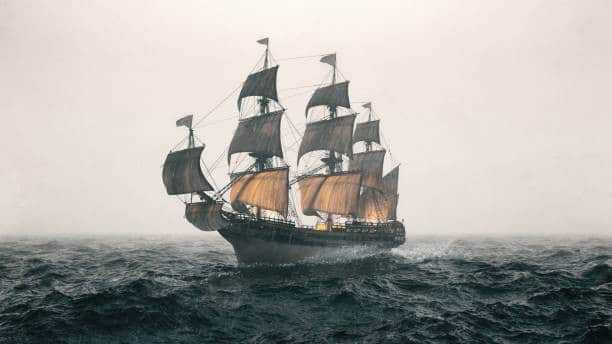
We begin where it began. On the water. In the hold of a ship. In the crossing that was designed to break people and instead revealed what they were made of.
Ten essays. Ten arguments. One inescapable conclusion.
We were never less than what we are.
The Crossing
What the Middle Passage Could Not Kill
Before the Ships
Before the first ship sailed, before the first chain was fitted, before the first African stood on an auction block in the Americas — there was a civilization. Several, in fact. West and Central Africa in the fifteenth and sixteenth centuries were not the primitive wilderness that European colonizers chose to describe in their justifications for what they were about to do. They were home to the Mali Empire, whose city of Timbuktu housed the Sankore University, one of the world’s oldest and largest centers of learning, with a library of up to 700,000 manuscripts at a time when most European cities did not have running water. They were home to the Ashanti Kingdom, whose goldsmithing, textile work, and political governance systems were sophisticated enough to outlast a century of British imperial pressure. They were home to the Kingdom of Kongo, whose legal traditions, diplomatic correspondence, and agricultural systems impressed even the Portuguese missionaries who arrived with their Bibles and their ambitions.
This matters because the story of what happened next cannot be understood without understanding what existed before it. These were not people waiting to be civilized. These were people who were taken from civilizations — torn out of their own histories, their own languages, their own systems of knowledge, their own relationships with God and land and community — and subjected to one of the most violent dislocations in human history.
The transatlantic slave trade operated continuously from roughly 1500 to 1875. Over the course of those four centuries, scholars estimate that between 12.5 and 15 million Africans were loaded onto ships bound for the Americas. They came from hundreds of distinct ethnic groups, speaking hundreds of distinct languages. The Wolof. The Mandinka. The Yoruba. The Igbo. The Akan. The Bakongo. The Fon. Each group carried its own knowledge systems, its own agricultural expertise, its own spiritual traditions, its own understanding of medicine, mathematics, metallurgy, and governance. All of this was in the hold of the ship with them. The captors did not know it. But it crossed the water anyway.
The Ship
The conditions of the Middle Passage — the ocean crossing from the West African coast to the Americas — were designed, systematically and deliberately, to dehumanize. The historian Marcus Rediker, in his definitive study of the slave ship, documented what that design looked like in practice. Men were chained together in the lower decks, lying flat in spaces as narrow as eighteen inches, unable to sit, unable to turn, unable to move without moving the man chained beside them. The crossing lasted between six and twelve weeks, depending on wind and weather. Dysentery was epidemic. Smallpox moved through the holds. Dehydration, starvation, and suffocation killed men who had survived the march from the interior and the holding pens on the coast. The psychological violence was as methodical as the physical — the noise, the darkness, the smell, the constant motion of the sea, the complete obliteration of every familiar reference point in a human life.
The mortality rate on the Middle Passage averaged between ten and twenty percent. That figure is cited so often that it has lost its weight. Let us restore it. Out of every hundred people loaded onto a slave ship, between ten and twenty did not arrive. They died in the hold, or they were thrown overboard — sometimes alive — when the captain calculated that their continued presence was a liability rather than an asset. The Trans-Atlantic Slave Trade Database, the most comprehensive academic record of the trade, documents over 36,000 individual slaving voyages. The numbers it contains represent the largest forced migration in human history, and the largest single maritime death toll of any cause before the world wars.
And yet. The question that this essay insists on asking is not the one that historians most often pose. They ask: how many died? The question this series demands is: who survived, and what does survival under those conditions reveal?
The Science of Survival
The people who were studying Black bodies in the eighteenth and nineteenth centuries were not doing so out of admiration. They were doing so in the service of an economic system that required a theological and scientific justification. If you are going to argue that a human being is property, you need evidence that they are something less than fully human. The plantation physician Samuel Cartwright published essays in the 1850s claiming that Black people had a diminished lung capacity, which he used to argue that forced labor was physiologically beneficial to them. J. Marion Sims, celebrated as the father of modern gynecology, developed his surgical techniques by operating on enslaved Black women without anesthesia, based on the documented belief that Black people felt less pain than white people. The United States Army conducted formal studies of Black soldiers during and after the Civil War, measuring their physical endurance, their reaction times, and their disease resistance. These studies were not conducted in good faith. But the data they produced told a story their authors did not intend to tell.
What the research consistently documented — across plantation records, military studies, and the observations of physicians who worked on both sides of the color line — was a population whose physical endurance, immune response, and psychological resilience under extreme conditions consistently exceeded what the theoretical models predicted. The plantation owners who described their enslaved workers as strong, capable, and remarkably difficult to destroy were not paying compliments. They were making an economic observation. But the observation was accurate.
Here is where precision matters enormously, and where this series will not take the easy road. The argument being made here is not that Black people are superhuman in some mythological sense. That framing is dangerous — it has been used historically to deny Black people adequate medical treatment, to justify their exploitation as laborers, and to construct a dehumanizing narrative in which Black pain and Black exhaustion are rendered invisible. The argument is something more specific and more powerful than that.
The argument is this: the conditions of the transatlantic slave trade and American chattel slavery were so extreme, so comprehensive in their assault on every dimension of human existence — physical, psychological, cultural, spiritual, familial — that they represented a threshold beyond which no human population could reasonably be expected to maintain coherent cultural identity, creative production, or organized resistance. And Black Americans not only maintained all three. They produced, from within those conditions, the most original and influential cultural forms in American history. The spirituals. The blues. Jazz. Gospel. Forms that would eventually become the foundation of nearly every significant American musical genre of the twentieth century, consumed and built upon by the entire world.
That is not ordinary survival. That deserves a different word. And the people who observed it first — who studied it, who feared it, who built legal systems to contain it — understood that they were dealing with something they had not anticipated and could not fully account for.
What Crossed the Water
The captors thought they were importing labor. What they were actually importing was knowledge. And they did not know it for generations.
The rice cultivation that made South Carolina and Georgia profitable in the eighteenth century was not European agriculture adapted to a new climate. It was West African agriculture transplanted by the people who had practiced it for centuries. The Gullah Geechee people of the Carolina coast — descended primarily from enslaved people taken from the rice-growing regions of Sierra Leone and Senegal — brought with them the specific knowledge of how to grow, harvest, and process rice in tidal conditions. The plantation owners who took credit for building one of the most profitable agricultural economies in colonial America were building it on a foundation of African expertise that they had neither the knowledge to replicate nor the honesty to acknowledge.
The same pattern appears in the indigo trade, in the livestock management systems of the Sea Islands, in the medicinal plant knowledge that enslaved healers practiced — and that plantation owners relied on when European medicine failed them, which it often did. The knowledge crossed the water in the same hold as the chains. The captors captured the bodies. They could not capture what the bodies knew.
And beyond the agricultural and technical knowledge, something else crossed the water. Something that cannot be measured in a plantation ledger but that proved, over the centuries that followed, to be more durable than any physical artifact. A spiritual inheritance. A way of understanding suffering that did not collapse under the weight of suffering. A theological framework that could take the same Bible that was used to justify their enslavement and extract from it a God of liberation — a God who had seen this before, who had parted waters for a people in bondage, who promised that the story did not end in chains.
Frederick Douglass, who taught himself to read in secret and went on to become the most consequential Black intellectual of the nineteenth century, understood this inheritance precisely. He did not inherit freedom. He built it — from nothing, from the scraps of language and law and theology that surrounded him — and then he spent the rest of his life demanding that the nation live up to the principles it had already committed to on paper. We will spend significant time with Douglass in Part Three. But it is worth noting here, at the beginning, that everything he became was forged in the same crucible that forged the spirituals and the rice fields and the survival of a people who were supposed to be broken.
They were not broken. They arrived. And what they built when they got here is the subject of everything that follows.
The Reckoning This Series Demands
The ten essays in this series will not always be comfortable reading. Some of what is documented here — the medical experiments, the legal architecture of exclusion, the deliberate and calculated destruction of Black wealth and community — is difficult to sit with. It should be. The purpose of discomfort is not punishment. It is clarity. And clarity is the precondition for any honest reckoning with where we are and how we got here.
But this series will not end in grief. It will end in the only place that the full historical record, honestly examined, can lead: in recognition of a people whose accomplishments — measured in intellectual output, cultural production, economic contribution, and sheer resilience under conditions designed to prevent all of the above — constitute one of the most remarkable chapters in the documented history of human civilization.
We begin at the crossing because that is where the modern story of Black America begins. Not in defeat. On arrival. In fact, after everything the Atlantic tried to take, something essential came through.
It always does.
This Series Is Just the Beginning.
Everything you have read here — and the nine essays that follow — is part of a larger conversation happening every day at The Power Is Now.
Subscribe to The Power Is Now TV to connect with me live every weekday, Monday through Friday, from 10:00 AM to 11:00 AM PST, as we record television shows across the Power Is Now TV Network. As a subscriber, you can participate in live tapings, engage in real-time discussions, and connect directly with industry leaders.
Visit ThePowerIsNow.com to access real estate magazines, books, podcasts, television shows, and exclusive media content focused on homeownership, business, and wealth-building.
For personalized support, consulting, and advisory services in real estate, mortgages, business, and personal finance, visit EricFrazier.com to schedule a consultation and learn more about my work as your trusted advisor in business and wealth.
Eric Lawrence Frazier, MBA
Your trusted advisor in business and wealth
www.ericfrazier.com | www.ericfrazieruk.com
NMLS #451807 | CA DRE #01143484
Schedule a consultation: https://calendly.com/ericfrazier/real-estate-mortgage-consultation-clients
