Fair Housing Series Part 6: The Racial Wealth Gap and the House That Built It.

And the House That Should Have Been Yours. By Eric Lawrence Frazier, MBA The single most important fact in the discussion of the racial wealth gap is this: the typical homeowner has a net worth approximately forty times greater than the typical renter. The Black-white wealth gap in America runs at roughly the same ratio. These […]
Fair Housing Series Part 6: The Racial Wealth Gap and the House That Built It. – Footnotes

And the House That Should Have Been Yours. National Association of Realtors Research Group, Snapshot of Race and Home Buying in America, February 2022. The report documents that the typical homeowner had a net worth of $300,000 compared to $8,000 for the typical renter — a ratio of 37.5 to 1. Among racial groups, the […]
Fair Housing Series Part 5: Digital Redlining

Algorithmic Bias and the New Face of Housing Discrimination. By Eric Lawrence Frazier, MBA Every person who writes code brings their whole life to every line. Their education, their experience, their assumptions, their blind spots, and their cultural reality are present in every decision about what to measure, what to optimize, and what to treat […]
Fair Housing Series Part 5: Digital Redlining – Footnotes

Algorithmic Bias and the New Face of Housing Discrimination. Fannie Mae, Desktop Underwriter Version 11.0 Release Notes (2022). Automated underwriting systems are trained on historical loan performance data. Because historical lending patterns reflect decades of discriminatory underwriting, the training data itself embeds the outcomes of prior discrimination. The system learns which borrower profiles historically produced […]
Fair Housing Series Part 4: HUD’s Enforcement Budget Has Been Cut.

Here Is What That Means for You. By Eric Lawrence Frazier, MBA The question of what HUD’s enforcement budget cuts mean for you is not abstract. It has a specific answer. And that answer begins with what you must do the moment you believe you have been discriminated against in a housing transaction. Document everything […]
Fair Housing Series Part 4: HUD’s Enforcement Budget Has Been Cut. – Footnotes
U.S. Department of Housing and Urban Development, “File a Fair Housing Complaint,” https://www.hud.gov/program_offices/fair_housing_equal_opp/online-complaint. HUD accepts fair housing complaints online, by phone at 1-800-669-9777, and by mail. The statute of limitations for filing a HUD complaint is one year from the date of the alleged discriminatory act. National Association of Realtors, Code of Ethics and Standards […]
Fair Housing Series Part 3: Disparate Impact Is Not a Theory. It Is a Law.

And It Is Under Active Attack. By Eric Lawrence Frazier, MBA Disparate impact is not a progressive legal theory. It is not an advocacy position. It is a doctrine of federal civil rights law, affirmed by the United States Supreme Court, that says a housing policy does not have to be explicitly discriminatory to be […]
Fair Housing Series Part 3: Disparate Impact Is Not a Theory. It Is a Law. – Footnotes
U.S. Department of Justice, “Justice Department Reaches $335 Million Settlement to Resolve Allegations of Lending Discrimination by Countrywide Financial Corporation,” December 21, 2011. The settlement resolved allegations that Countrywide discriminated against qualified African American and Hispanic borrowers by charging them higher fees and interest rates than similarly qualified white borrowers between 2004 and 2008. U.S. […]
Fair Housing Series Part 2: Fair Housing Act Was a Compromise
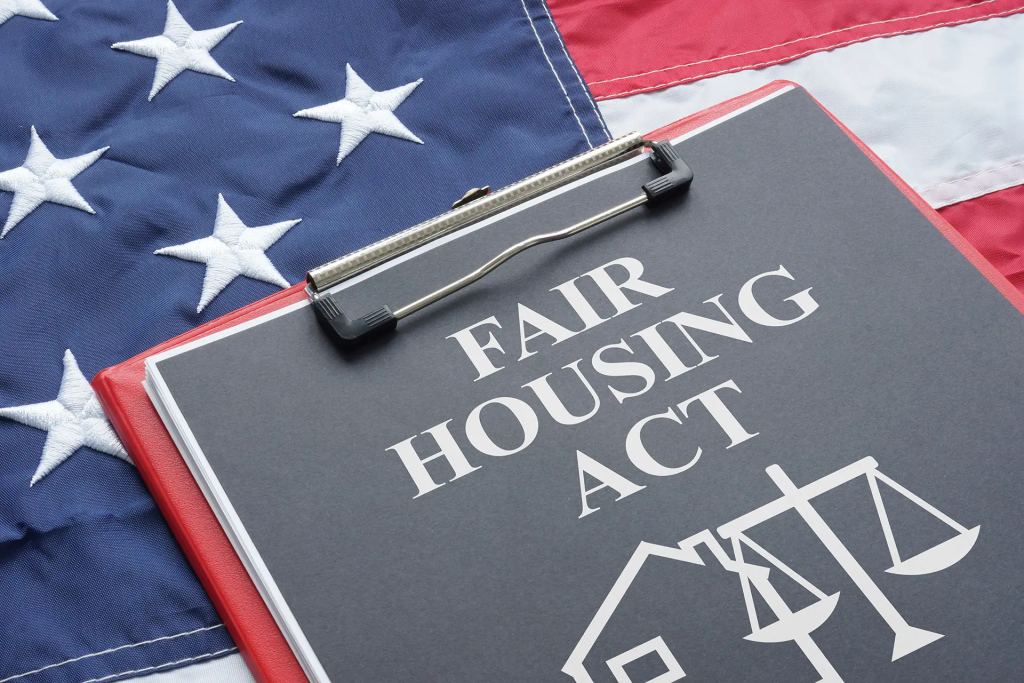
Here Is What It Left Out — and Why That Still Matters in 2026. By Eric Lawrence Frazier, MBA The word “fair” in Fair Housing has always meant something specific to me. Fair is not a legal term. It is the Golden Rule compressed into one syllable — treat others the way you want to […]
Fair Housing Series Part 2: Fair Housing Act Was a Compromise – Footnotes
Civil Rights Act of 1968 (Fair Housing Act), Pub. L. No. 90-284, 82 Stat. 73 (1968). Senator Everett Dirksen brokered the compromise removing HUD’s direct enforcement authority, substituting a 30-day conciliation process. Equal Credit Opportunity Act of 1974, Pub. L. No. 93-495, 88 Stat. 1521 (1974). Prior to ECOA, no federal prohibition existed against denying […]
